Keeping Your Christmas Tree SAFE For A Happy Holiday Season

According to the National Fire Protection Association, “U.S. fire departments responded to an estimated average of 210 home structure fires per year that began with Christmas trees in 2010-2014. These fires caused an annual average of six civilian deaths, 16 civilian injuries, and $16.2 million in direct property damage.” This national statistic is no different for Nashville, Franklin, Brentwood, or any other areas of Tennessee, so for this reason we are going to take a look at less combustible options thereby ensuring a happier holiday for all!
The simplest of solutions to provide peace of mind that your home won’t burn down while you are asleep or away is to use a fake tree! Here are some of the benefits: They are cheaper. They are easier to handle when setting up and taking down. There is far less mess from needles and sap. They are more durable, and they are less expensive as the average one will last for six years.
As simple as that sounds, some of you (myself included) will find that to be a Crummy-Christmassy-Cop-Out. No self-respecting gift-giver wants their packages resting under a fake tree! Here are some helpful ways to ensure your tree has as little combustibility as possible. First, be forward thinking and buy early! When you buy a couple of days early you should place your tree in a full bucket of water outside for 2-3 days before bringing it in and decorating. This will ensure as much hydration as absolutely possible which is supremely important because it is the dry ones that are easiest to catch fire.
Second, take steps to ensure the tree remains hydrated once set by the hearth. Make sure that you use a base with a reservoir to hold water and maintain its level daily. Also, have a spray bottle handy to spritz the needles and limbs each day. Another idea that I really like is to place a cheap air humidifier in the room with the tree.
Third, never overload your lights. Use multiple surge protecting power strips if necessary to keep from plugging too many strands into each other. When powering the lights off ensures that you do so by unplugging at the wall. Don’t use the little turn switch that comes on them and don’t use the timers. Always power your lights on and off manually because as soon as you set the timer, you will forget about them and the lights will inevitably turn on when you have to be away unexpectedly.
Lastly remember the three “Keep-Aways.” Keep your tree away from open flames, pets, and children. As my Jamaican guest told me one Christmas, “Remove dem naked lights, Mon, what wrong witchu??” He was referring to the candles I had precariously placed on the nearby mantle. As much as it may seem like common sense to me now, in the moment I never even thought that this may be a hazard. Well it is, and a big one. One little spark from those candles could’ve made for one miserable holiday! Let’s keep dem naked lights in the other room, yea?
As far as pets and kids go, as much as they want to play with the presents and chew on the branches, we MUST take some time to sit down with them to explain why this is paws-off until Christmas morning…mostly to ensure the tree remains upright! A tipped tree could cause lights to break and fire to start upon impact. You can imagine if the fire were to ignite carpet, a doggie bed, drapes or anything else as combustible. It would be but a matter of moments before it became out of control.
As you may have noticed at the beginning, fires caused by Christmas Trees are statistically rare, but tell that to someone it has happened to and you’ll find that fact of zero comfort to them. Though maybe a tiny one, this advice is my gift to you so that your family is not one of the statistical rarities. We at Johnston and Associates wish you and yours a very safe, Merry Christmas, Happy Holidays, and Happy New Year!
The Best Compliment We Can Receive Is Your Referrals!

Shopping for and comparing insurance can be a tedious task. We can offer your friends and family an easy way to compare insurance rates without having to go into an office – they can call us at (615) 716-2123 or just visit our website.
Now you can share our superior service and quality insurance products with your friends and family. We’ll follow up with many fine insurance providers to deliver high-quality, affordable insurance options tailored to deliver the value and coverage you’re seeking.
“We will give you a free gift card whenever you send us a referral.” We look forward to working with your friends and family members soon.
Our insurance partners include the following industry leaders:
“We are loyal to you, our customer first and foremost – not to any one company. If you are not happy please let us know, we’ll quote your account with the carrier of your choice.”
Everything You Wanted To Know About Mold Prevention (But Were Afraid To Ask)

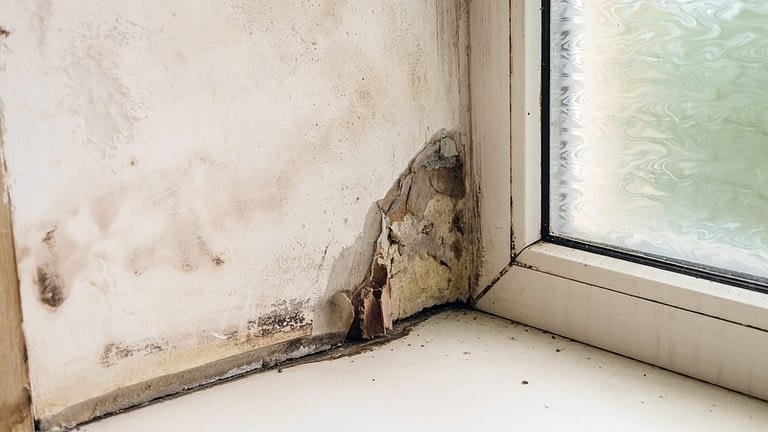
The roof of your Tennessee home is an essential part of the structure and any damage to it can cause structural damage right down to the foundation. The problem is, you do not see the roof often. You probably don’t think about it too much either. Nevertheless, your roof faces a wide range of risks from the weather, to heat, to other damage such as falling trees. One of the biggest risks to your roof is water. Protecting your home from water damage, which not only weakens the structure but leads to mold build-up – is a must! Your homeowners insurance may (or may not) cover mold, depending on how it’s discovered.
Routine Inspections are Necessary
Perhaps the first and most important step for homeowners is to have their roof inspected on an annual basis at least. This will provide the highest level of protection for the homeowner in preventing water damage, especially damage that gets into the roof’s foundation and under shingles. Having a licensed roofing company inspect your roof for damage should happen in the spring and fall.
Get Into the Attic
Take a flashlight and head into the attic. With the lights out, do you notice any holes or areas where the sun is getting into the space? This could signal an area where water can also get into your space. It’s best to also touch the walls and flooring to look for areas of moisture. Often times, water will run down the beams and hide very easily from plain view. Nevertheless, it could end up under your insulation and in your ceilings.
Look for Signs of Leaks
There are various other ways to spot leaks:
- Does the attic smell musty?
- Do you have stains on the ceilings or walls of your home that you cannot explain?
- Do you notice your paneling, floorboards or other materials warping?
- Is there peeling wallpaper or paint noticeable?
- Do you see missing tiles or shingles from your roof?
If you spot any of these concerns, talk to a roofer. In some cases, your home insurance can help to cover the damage. However, this depends on the cause. If routine maintenance is lacking, and is the cause of the damage, you may have a problem. Protecting your home means looking for water leaks regularly.
Here at Johnston & Associates Insurance, we’ll help keep your home safe. Please call us at 615-716-2123 for more information on Franklin, Brentwood, or Nashville home insurance.
“We are loyal to you, our customer first and foremost – not to any one company. If you are not happy please let us know, we’ll quote your account with the carrier of your choice”
Tips For Preventing Ice Damming

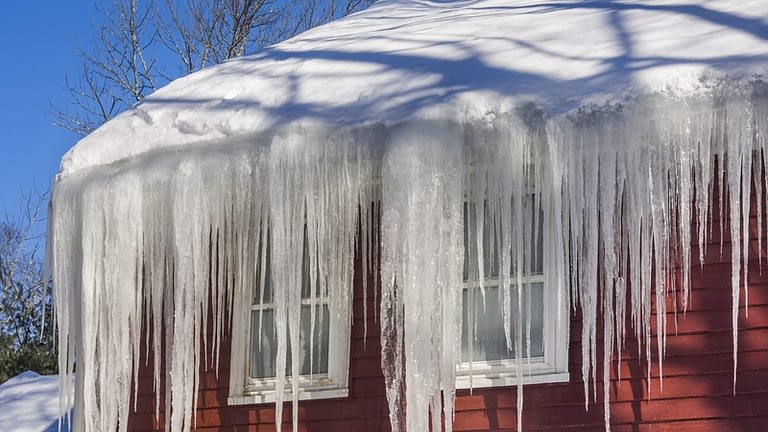
During their study on the subject, the University of Minnesota defined an ice dam as, “A ridge of ice that forms at the edge of a roof and prevents melting snow (water) from draining off the roof. The water that backs up behind the dam can leak into a home and cause damage to walls, ceilings, insulation, and other areas.”
Obviously in order to keep our insurance rates low we want to avoid making a homeowner’s claim when we can. Here in the Nashville and Brentwood / Franklin area we can get caught off guard by cold weather from time to time and here are a few simple things to be sure are in place in order to have one less worry.
One key to avoiding this is actually counter-intuitive. One may think to keep their roof heated, but this in fact prevents the dissipation of snow and causes melt-water to run from the heat and freeze again as it nears the edge of the roof. You should actually keep your roof cold so that the snow naturally evaporates without becoming a block of ice. The maximum temperature of the underside of the roof should be 30 degrees, no more. So how do you ensure this? You ensure this by having proper insulation. This keeps the heat in below the insulation and the cold on the other side…where your roof is. Make sure any gaps are sealed. A false recommendation by some remodeling contractors is that heat passing through openings in the insulation to warm your roof will prevent ice dams. Precisely the opposite is actually true. Once that water reaches those frozen eaves you will actually have a dam that the best of winter beavers can’t budge. Don’t let uninformed contractors tell you otherwise.
If you are the owner of an attic furnace, some levels of ice damming may be unavoidable, however excess insulation and maintenance will at least keep the runoff to a minimum. When insulating, be sure to leave a gap of space between the roof deck and the pink stuff. This will stave off the condensation that can cause the birth of an ice dam. There are polystyrene rafter air channels that you can get at home supply stores to be installed here or another way to do this is with regular old Styrofoam blocks in this space. Also for those with an attic furnace it would make good sense to lay insulation batts or blankets around the ductwork from the furnace to keep the attic heat at a minimum.
Make sure there is proper ventilation of your attic as well. If your structure is not inherently built to do this, it does not cost much to install a mechanical vent at one end of the attic to expel the excess heat provided you have another static vent at the other end to bring in the cold. Cold air moves into the attic, warms as it travels to the other side and is expelled before it is of the temperature to melt the snow above.
An insurance professional like an agent at Johnston & Associates Insurance, located in Franklin Tennessee, can tell you more about reducing homeowners risk and get you a free quote.
Business Insurance 101

Business Insurance 101- Mitigate Thy Risk
Business insurance is a vital component to ensuring your business remains operational when a loss occurs. You simply cannot control everything that happens as there are unavoidable risks that every business faces. However, there are steps you can take to mitigate some of the risks and, in turn, help reduce the overall costs related to your business insurance.
Employee-Related Risks
To minimize employee risks, focus on:
- Create rules and procedures to reduce risks of injury.
- Enforce employee safety procedures and penalize those who break protocol.
- Keep your work environment as risk-free as possible by working with your business insurance agent to minimize such risks.
Vendor-Related Risks
Your vendors present risks to you as well. To avoid them:
- Work only with vendors that you are confident in and have verified as quality, experienced professionals with a solid reputation.
- Ensure vendors have all applicable business insurance to reduce your risks.
- Document all vendor activity thoroughly using names, times and dates.
- Keep your vendors as simple as possible. Get your products from local providers whenever possible to reduce the number of people and businesses in the supply chain.
Customer-Related Risks
Customers can fall and be hurt, or otherwise can create their own mistakes that you may be liable for in some way. Mitigate these risks by:
- Ensure all customer areas of your business are as risk-free as possible.
- Put procedures in place to minimize the most common risks, such as slips and falls on wet floors.
- Ensure any product handed over to customers is inspected to ensure it is safe.
- Interact with customers filing claims quickly and get the details so you can make adjustments to prevent further mistakes.
Business insurance is one of the best ways for you to mitigate all of these risks. When you have ample liability insurance in place, you have a financial net to catch your business so you don’t lose everything when an accident happens. We’ve got you covered. Call Johnston & Associates in Franklin, TN at 615-716-2123.
Why Does My Tennessee Homeowners Insurance Go Up Every Year?

One of the questions we most frequently get asked as personal insurance agents is, “Why does my homeowners insurance go up every year when haven’t made a claim?” There are a few reasons for that….
One big reason for the increasing cost of home insurance is that there have been an inordinate amount of storms and hail damage in Tennessee in the last several years. We’ve had multiple storms that have caused trees to fall on homes, wind damage that has broken windows and awnings, and major hailstorms that have destroyed roofs all across Tennessee. Because of these natural disasters, homeowners insurance companies have had to make huge payouts in short periods of time.
Another reason for increasing rates is that the cost to rebuild your home is increasing every year. You have home insurance for the cost to rebuild your home if it were completely lost in a fire, storm or other disaster. The cost to rebuild a new home is always going to cost more than what your home is actually worth in today’s real estate market. Your home may be 10 or 20 years old, and not as valuable as a brand new home, which is what the insurance company pays for when your home is destroyed.
Those are the two main reasons that you’ll see increases in your home insurance each year. Another couple of items to look at when you contact us at Johnston & Associates are your deductible and to ask us to perform an updated replacement cost guide. This assures that your dwelling coverage amount is updated and not too high or too low.
One other thing that can help reduce rates is to package your home and auto insurance together with the same company. We represent numerous carriers that offer substantial discounts for combining insurance. Lastly, adding an umbrella or Life policy can create substantial discounts as well.